Allianz Turkey
Allianz Value-Added Services
Allianz aims to enhance user experience by making its value-added services more visible, accessible, and strategically positioned across digital channels.

Industry
Insurance
Headquarters
İstanbul/Turkey
Founded
1923
Company size
2500+

Brief
Allianz aims to enhance user experience by making its value-added services more visible, accessible, and strategically positioned across digital channels.
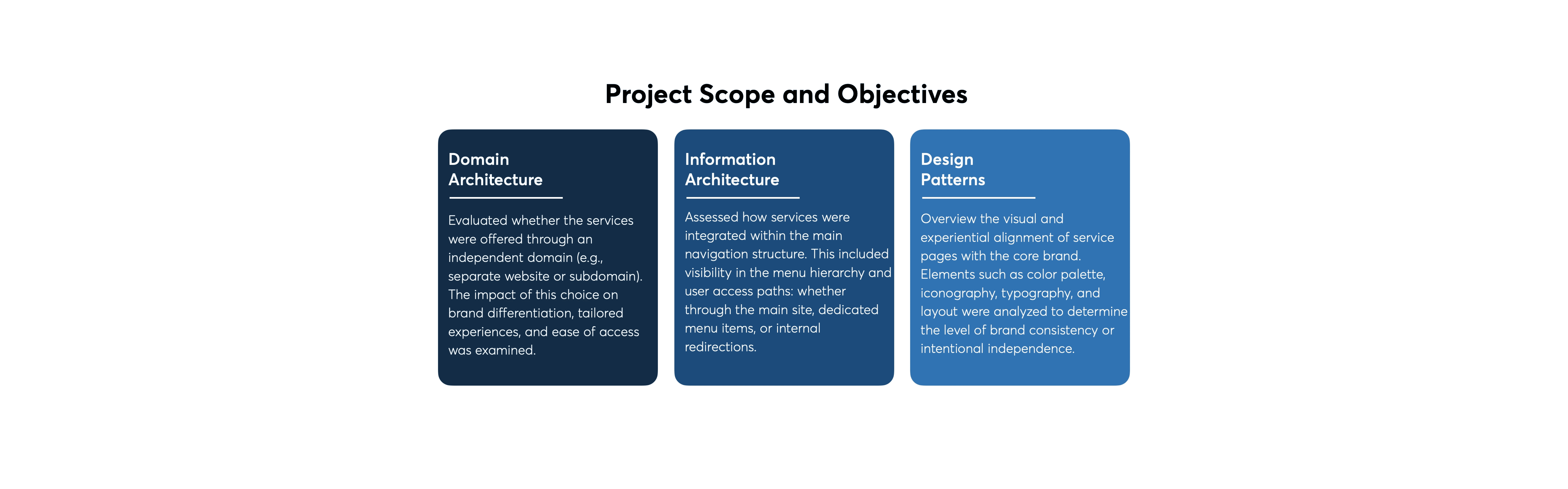
To support this goal, a benchmarking study has been conducted to explore how such services should be structured, navigated, and experienced. As part of the scope, the presentation and positioning of products and services in the selected benchmarks were analyzed across three key dimensions.
Table of Contents
Comparative Analysis
Benchmarks
Banks
Insurance Companies
Other Sectors
Allianz Abroad
Conclusion & Findings
Recommendations
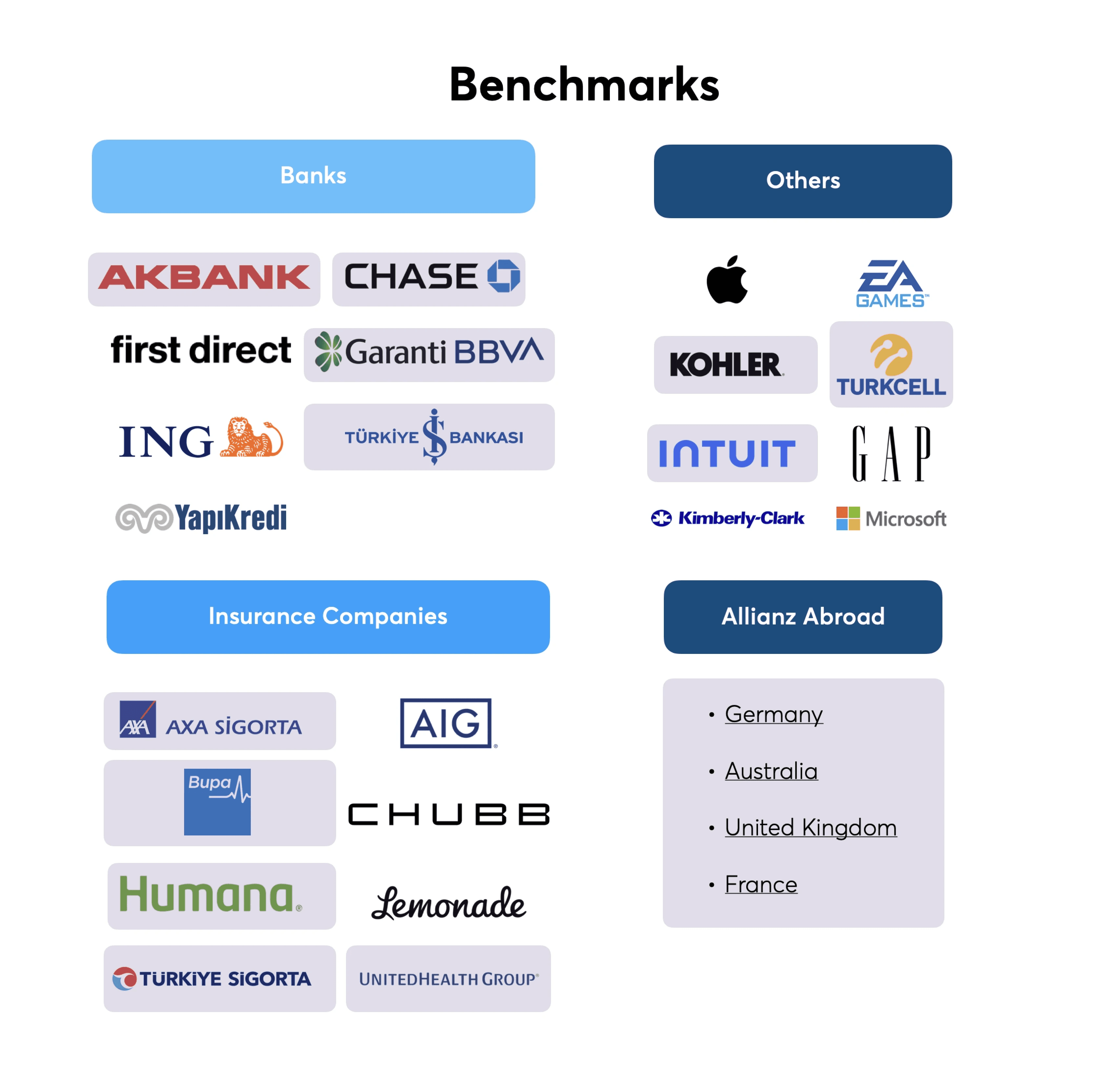
Benchmarks
6
Different Industry
Allianz Countries
Benchmarks
Banking
Akbank
Chase US
First Direct
Garanti BBVA
ING
Turkiye Is Bankasi
Yapi Kredi
Insurance
AIG
AXA
Bupa
Chubb
Lemonade
Humana
UnitedHealth Group
Turkiye Sigorta
Others
EA Games
GAP
Microsoft
Turkcell
Allianz Global
Australia
France
Germany
Italy
Spain
United Kingdom
Findings & Insights
1. Separate Domain – Independent Brand Strategy
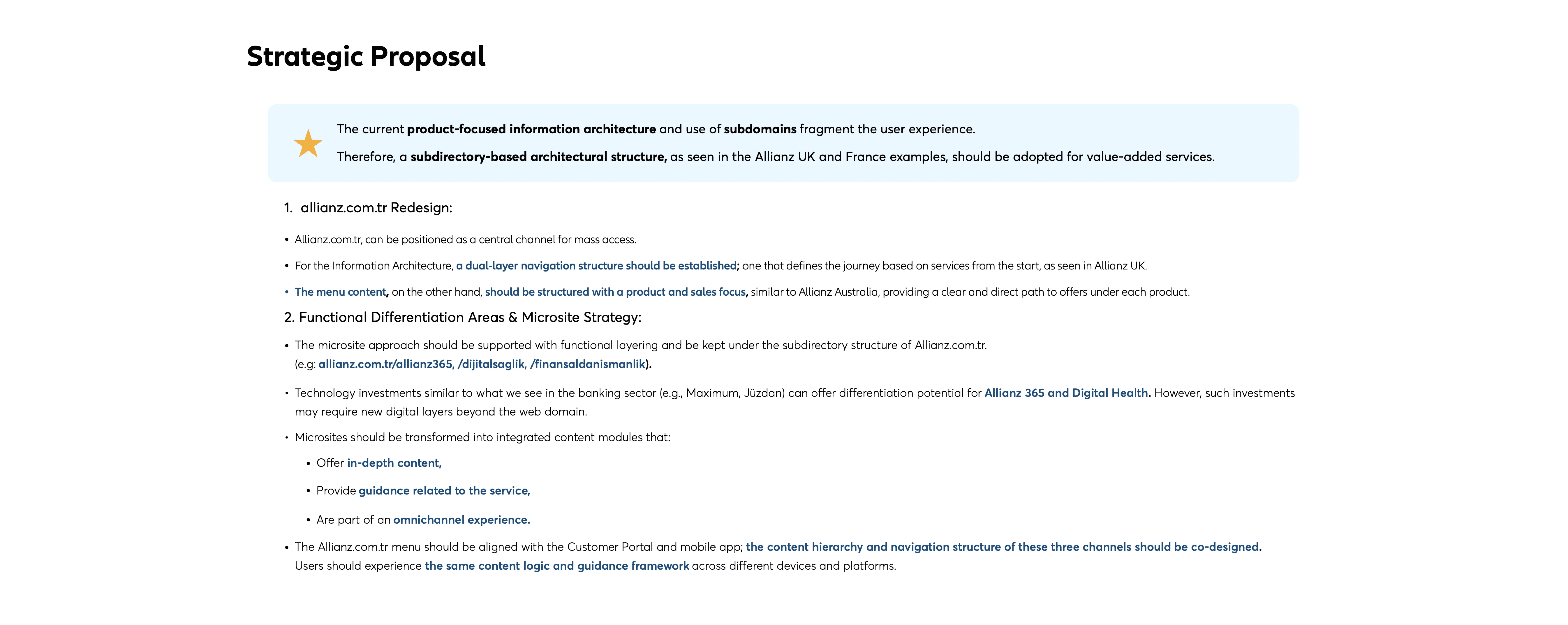
Products with distinct positioning or unique audience segments often adopt a separate domain strategy.
In this approach:
The product’s digital presence (website/app) is physically and perceptually detached from the parent brand.
Product-specific features, campaigns, and services are offered exclusively through its own domain or app.
However, lead generation and content marketing for that product typically remain visible and prioritized on the main brand site.
This model is common among large financial, insurance, and tech organizations managing diverse portfolios.
Its strength lies in targeted experiences and brand flexibility,
while the main challenge is maintaining brand coherence and preventing user confusion about ownership or authenticity.
2. Multi-Layered Brand and Service Architecture
Within a single corporate umbrella, products and services can be structured in two primary ways:
As independent domains or sub-brands, or
As integrated experiences within a unified domain that retains brand consistency.
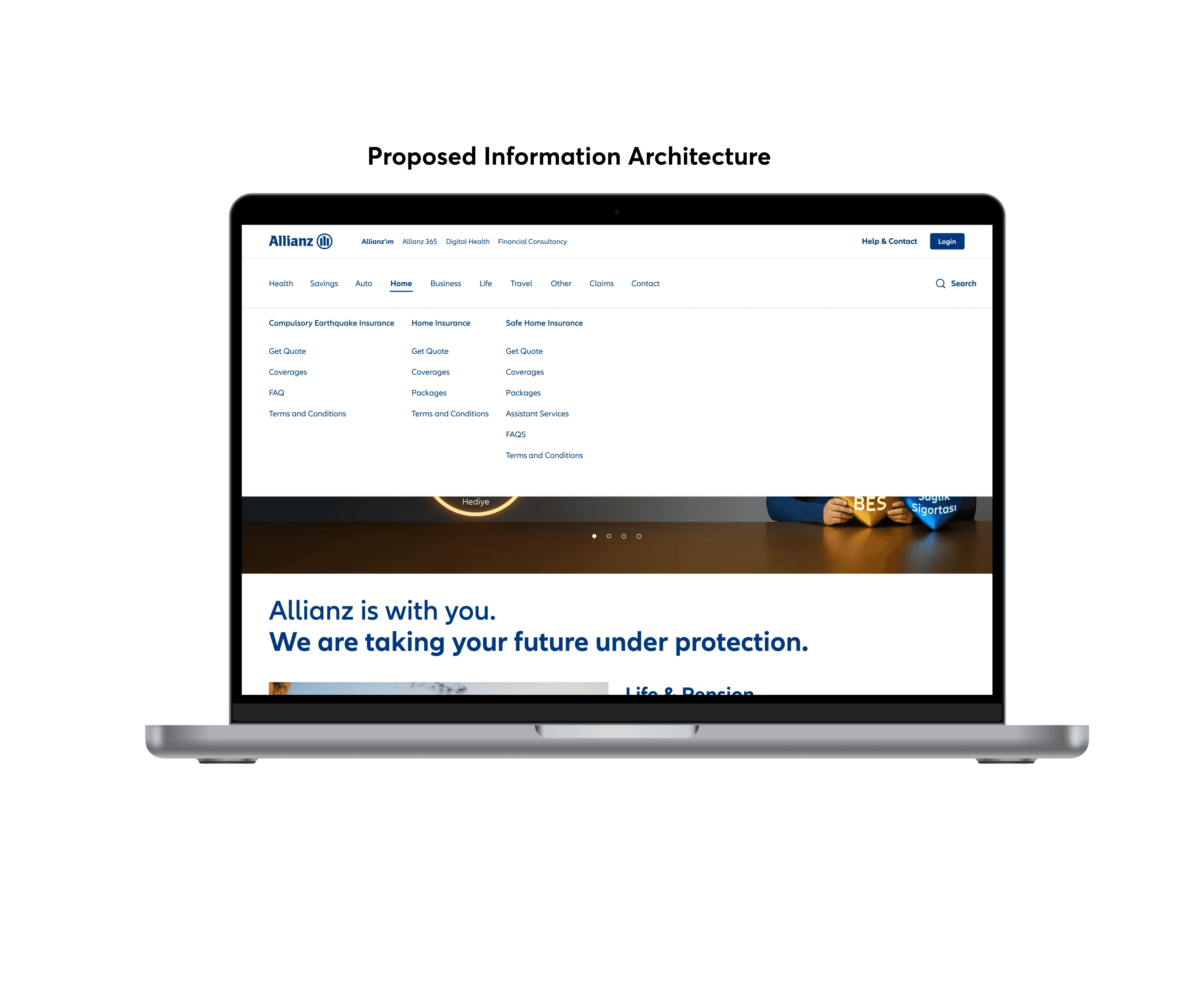
Organizations addressing multiple audiences under one group or brand (e.g., insurance, investment, brokerage) tend to adopt multi-layered navigation and information architecture.
In this model:
Top-level distinctions (e.g., Insurance, Brokers, Services) establish clarity.
Each product or service layer (e.g., Car, Home, Health, Travel) offers its own dedicated navigation and contextual hierarchy.
This approach enables users to navigate deeply within their interest area while maintaining a coherent sense of belonging to the parent brand.
Let's collaborate!
Schedule a call with Murat